
Meet the Breeder
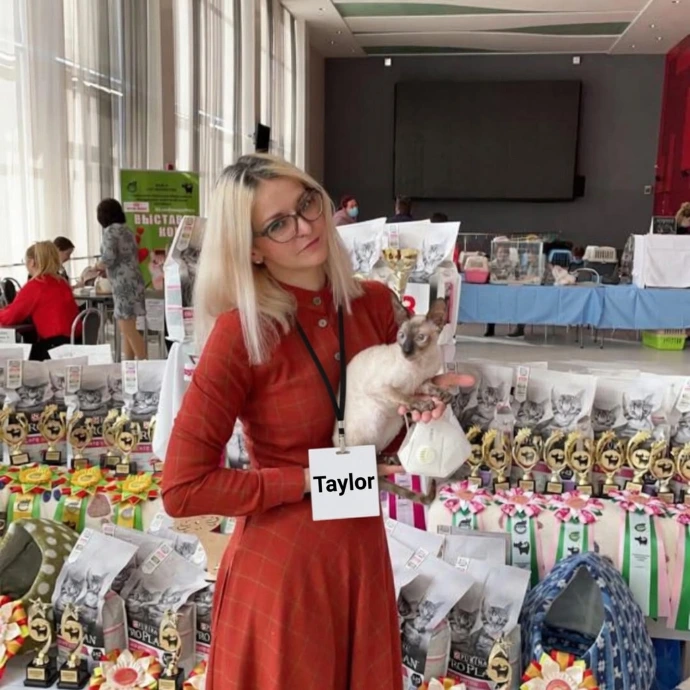
Despite growing up with just dogs, I fell in love with Cornish Rex kittens for the first time when I was sixteen years old! My mom has always been a major animal lover, and she really nourished my enthusiasm for raising and fostering kitties. I received my first purebred cat, a Himalayan seal point, when I was a teenager, and I adored her. For a few years, I bred her as a hobby with a maine coon, learning as I went and taking in as much information as I could about cats. Then I met my partner, Josh, when I was twenty years old. We took the important decision to buy premium show Cornish Rex kittens after we were married. That year, I went to my first cat exhibit, and it was a very eye-opening experience. I became well aware of the traits the judges were looking for in a traditional Cornish Rex, especially how important it was to have a calm, easygoing personality and the soft, "curly" coat that Cornish Rex are known for. Another eye color that won my heart was deep blue. These qualities have been essential to my breeding goals ever since.
Josh and I immediately set out to ensure that our cats were not only gorgeous and well-mannered, but also extremely healthy. Eliminating troublesome lines (FIP, HCM, and weakened immune systems) was the first step. Given that Cornish Rex kittens sometimes have delicate stomachs, we became complete nerds about cat nutrition. I soon developed an obsession with learning as much as I could about raw feeding, and I now enjoy assisting other families of Cornish Rex kittens in comprehending and gaining confidence in this practice. We periodically need to add additional lines, so it's a continuous process. We only have your and our pets' best interests in mind.
Every evening, Josh and I do the cat chores together, and yes—we give each cat their own bedtime kisses. I seriously couldn’t do this without him. He loves these cats just as much as I do, and together, they’ve become our whole world. Our house built for them and our friends see us repeatedly through the week bringing their friends and children. Josh and I don’t travel much, we really prefer to be home watch after our home and kittens. We both don’t cut corners and feel we can’t spare any expense with our kitties! This means we choose wisely what to invest in so they can be as healthy and happy as possible.
Finding your dream home made easy
Real estate solutions tailored for you

Real estate solutions tailored for you
Real estate solutions tailored for you

Real estate solutions tailored for you

Real estate solutions tailored for you
Real estate solutions tailored for you
Explore your ideal property

The Cattery
I'm a little fixated with perfection! My cats and Cornish Rex kittens should be immaculate at all times. I closely monitor illnesses and problems, taking the appropriate measures to guarantee your comfort and contentment with your Cornish Rex kitten. This, of course, means that none of my Cornish Rex cats are genetically tested for HCM and PKD1 and have a history of FIP in their pedigrees. No ill cats, diseased cats, or cats with undesirable behavioral qualities are bred by me..
A loving home
My spouse and I adore and lavish affection on our Cornish Rex kitties. Once litter-trained, the kittens have complete access to my eating and living areas. They are a valued part of who we are. Our local veterinarian performs regular examinations on all of our cats, and I clean and brush my Cornish Rex cats daily. All of our Cornish Rex kittens are handled and exposed to a variety of sights, sounds, and smells from the time of their birth. They've dealt with visitors who want to see cat shows and cuddle kittens! My Cornish Rex kittens are never left alone in a bathroom or bedroom. They don't hiss since they're used to being around noise and people.
Because they are accustomed to being around people and noise, they don't hiss and hide beneath the bed. I don't keep my cats in cages or feed them kibble, which causes poor nutrition. I feed them raw since it's better for them and their future owners. It's definitely not the easier method, but I don't take any shortcuts for them!
Raising Your Kitten: Week by Week
Weeks 3–4: They have fully opened their eyes and acquired speech—a lot of meowing! They become more conscious of their environment and start to leave their nursing box. In the quintessential Cornish Rex way, they become completely floppy when hugged and start giving hugs and kisses.
We begin by giving them some "stress training," such fast upside-down holds and more paw handling, and then we carry them about the home while doing tasks or utilizing devices. We also start showing puppies YouTube videos that desensitize them to various household noises. At the end of week four, kittens are introduced to raw food and their first litter box, although they are still mostly breastfed. Once every four weeks, they even take short breaks in the living room to interact with the big cats!
Weeks 5–8: Now is when the fun begins! Exuberant kittens are starting to explore new parts of the house and develop their own little personalities. Despite the fact that the results differ—some kittens nap on the bed when I ask them to, while others Any strong opinions, let me know with loud meows!
At this stage, handling starts to include more people. They are used to being picked up in a variety of ways, and we begin their grooming journey with their first bath (along by a lickable treat, of course). They frequently take two or three baths before heading home. Friends and guests also start to show up to help with socialization—more hugs, more fun, more information.
Weeks 8–10: The Cornish Rex kittens have completely assimilated into the family by this time. They continue to be hugged and loved daily and are quite comfortable among guests because of our Kitten Cuddle Visits. They may now roam the living room like little kings and queens thanks to the Petkit Automatic Litter Robot.
As we do some "carrier training" to help them adjust to their own carriers, I continue to encourage them to groom themselves, use the litter box, and play gently. All of a sudden, they are confident, outgoing, and ready to take on the world—or at least the couch.
Weeks 11–14: Kittens have a last health checkup and are spayed or neutered at this time to ensure they are prepared for their new homes. They are litter trained, well-socialized, and totally accustomed to being groomed, including nail and brushing.
By the time they leave, they should be easy to handle and used to living in a bustling, loving household. I often remind people that handling is important—if you don't use it, you lose a talent! To put it another way, keep brushing, kissing, and hugging them when they are at home with you.

